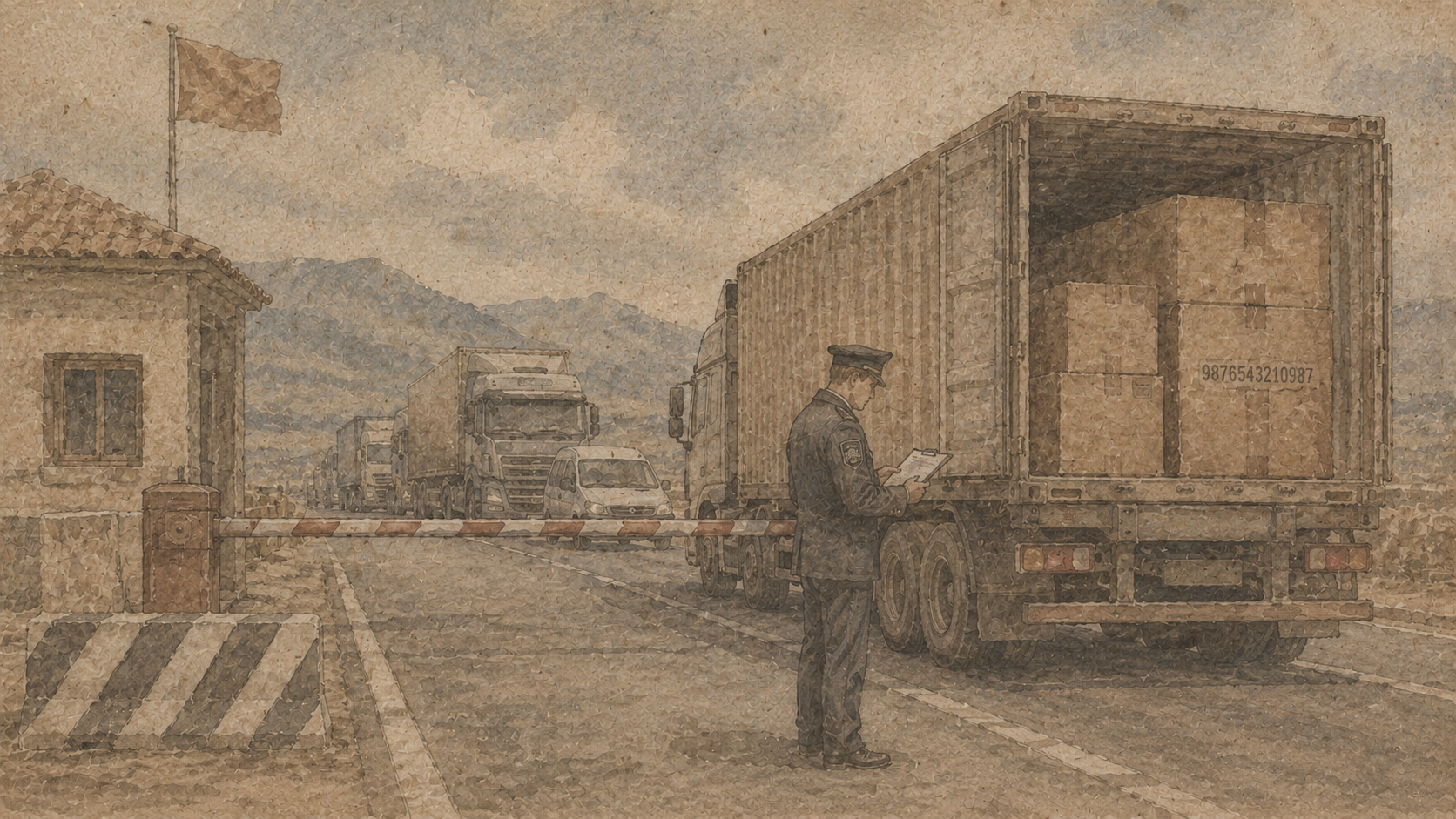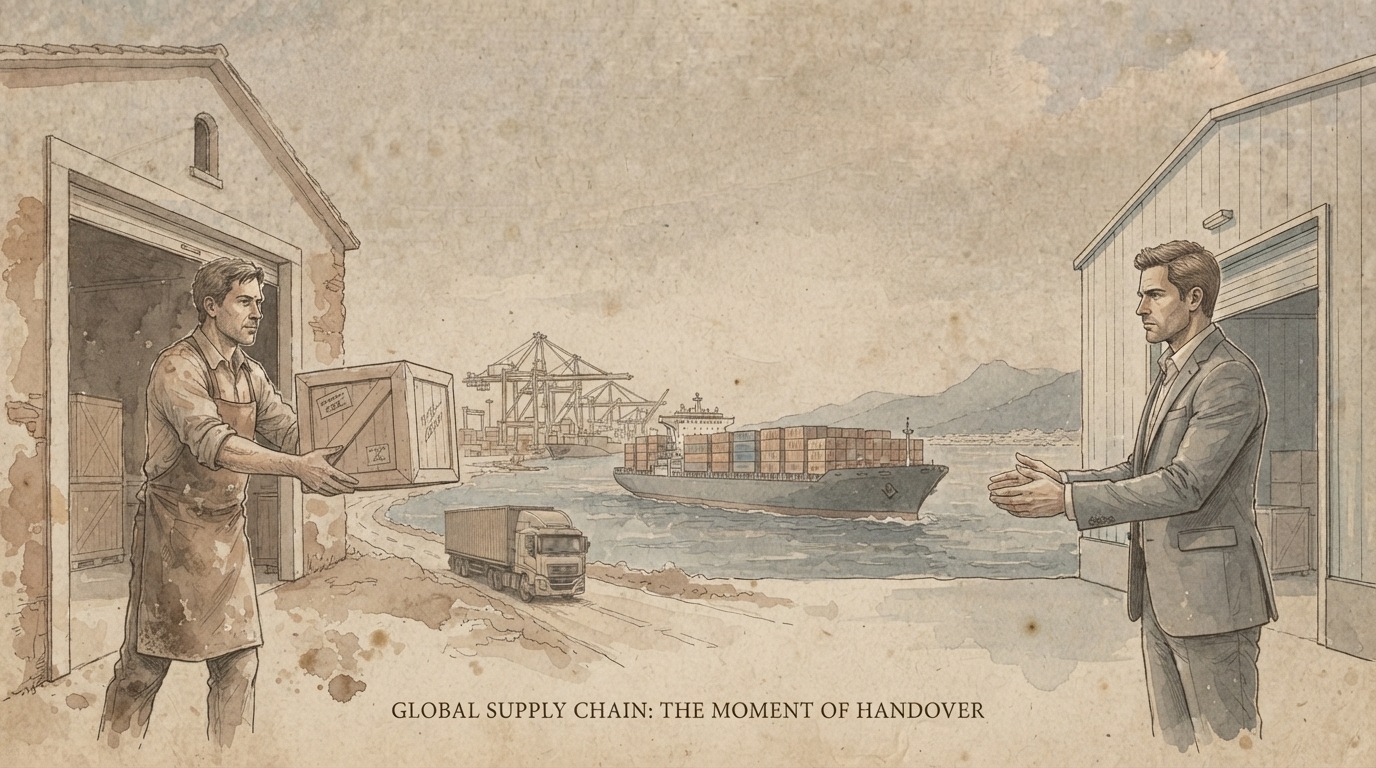
Two offers land on your cargo request. One says $2,400, the other $3,150. Easy choice? Not until you read the three letters next to each price.
If the first is EXW and the second is DDP, the "cheap" offer still owes you trucking to the port, the sea leg, insurance, import clearance and VAT. By the time you have added all of that up, it is usually not the cheap one any more.
Those three letters are an Incoterm — and they change everything.
What is an Incoterm?
Incoterms are eleven standard trade terms published by the International Chamber of Commerce. They exist for one reason: to make sure the seller and the buyer are talking about the same thing when they agree on a price.
Every Incoterm answers three questions:
At what point does risk transfer from seller to buyer — meaning, if something gets damaged, whose problem is it?
Who arranges each leg of the journey — pickup, trucking, sea freight, customs clearance?
Who pays for each leg — in other words, what is actually included in the price you are looking at?
The trap that catches almost every new importer
EXW — Ex Works — is the most common term offered by manufacturers, especially in Asia. It is also the most misunderstood.
EXW means the seller's job ends at their warehouse door. Everything after that — trucking to the port, export clearance, the sea leg, insurance, import clearance, VAT — is yours to arrange and pay for.
A $2,400 EXW price from China can easily become $3,800 by the time goods arrive at your warehouse. The product price was real. The total cost was not.
How responsibility shifts across the terms
Think of Incoterms as a sliding scale. On one end, EXW puts almost everything on the buyer. On the other end, DDP — Delivered Duty Paid — means the seller handles absolutely everything including import duties. You just open the door and receive the goods.
In between sit terms like FOB, CIF and DAP — each shifting a different portion of cost and responsibility from one side to the other.
The right term for you depends on your experience, your supplier relationship and how much control you want over the logistics process.
Where to find every Incoterm explained
You do not need to memorize all eleven today. When you create a shipment request on Viago, you will see an Incoterms field — and every single term is explained there in plain language so you always know exactly what you are selecting.
One thing to keep in mind — in the early stages of a new supplier relationship, before trust is established on both sides, you will almost always be working on EXW terms. That is exactly why knowing every detail of the transportation process matters — and where Viago can help.