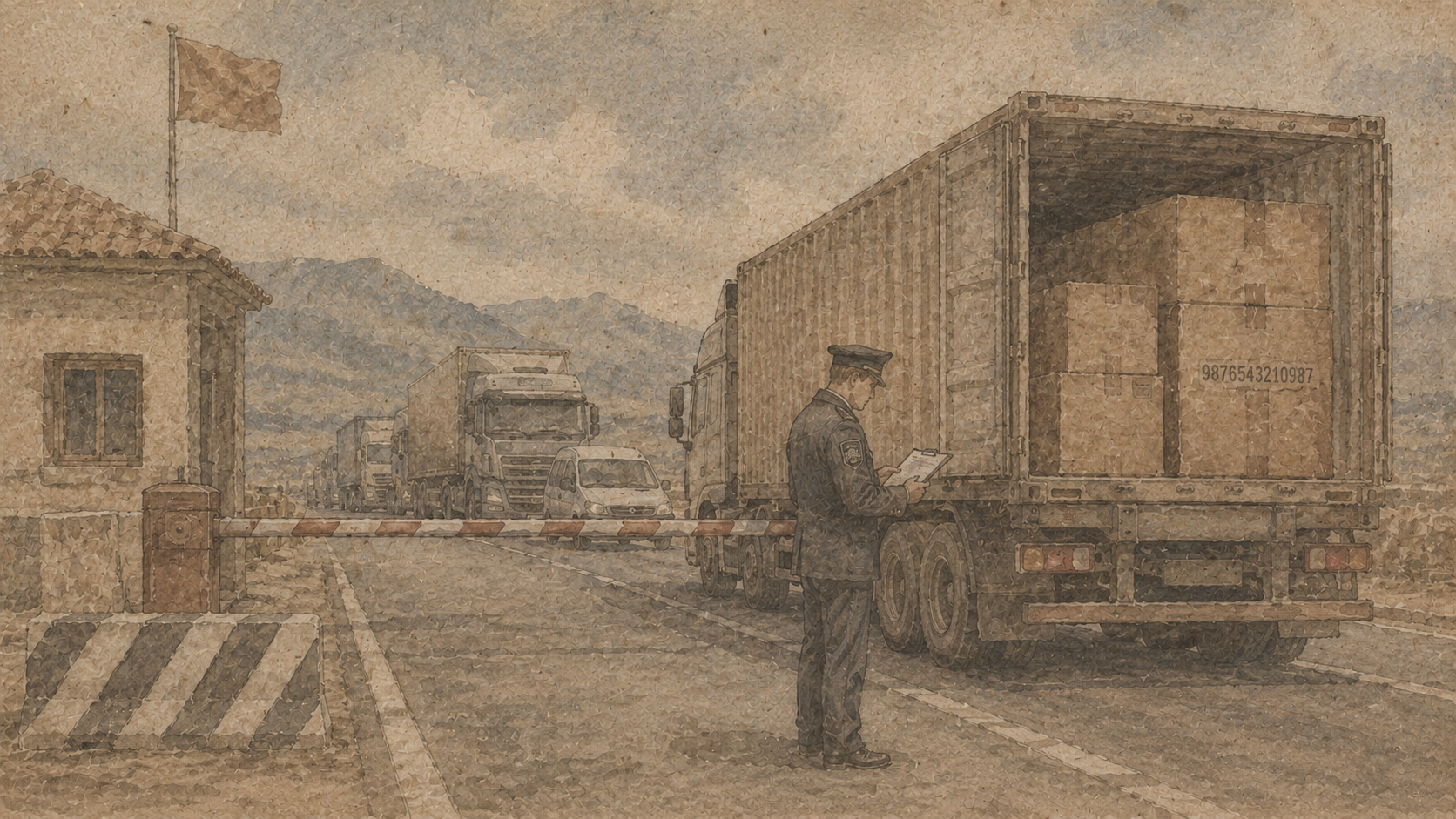
Your shipment is at customs. The forwarder is waiting. The truck is booked. And then the message comes — your goods are held for inspection because the declared product classification does not match what is in the container.Two days. Sometimes five. Occasionally two weeks.The shipment that was supposed to arrive on Tuesday becomes a problem that costs more than the original freight quote — in storage fees, in delayed production, in missed delivery commitments to your own customers.In most cases, the root cause is simple. The wrong HS code.
What is an HS code?An HS — Harmonized System — code is the internationally standardized system for classifying products. It exists so that customs authorities anywhere in the world can identify exactly what cargo is being shipped without opening every box.Take shampoo. The HS code 330510 covers shampoos as a general category — thousands of different products from hundreds of brands, all under the same six digits. Add more digits and you get more specific. A medicated shampoo has a different extended code than a standard one, because different rules and duties may apply.Every product that crosses a border has an HS code. The code determines the duties, taxes and regulations that apply to your import or export. Get it right and customs is straightforward. Get it wrong and customs becomes a conversation you did not budget for.
What the right HS code actually saves youPrecise HS code classification is far more than a customs formality — it is one of the key levers of financial optimisation for any business. When a code fits a product perfectly, the process not only runs smoothly but the company also fully benefits from the exemptions and reliefs available under the law. For example, certain children's products for under-3s are exempt from both import duties and VAT — a significant advantage that directly enables competitive pricing in the market.
How to find the right HS codeStart with your supplier. Manufacturers who export regularly know the HS codes for their products and should be able to provide them on the commercial invoice or packing list.If your supplier cannot help, use your country's official customs tariff database — most customs authorities publish searchable classification tools online. Describe the product accurately: what it is made of, what it does, how it is used.When in doubt, ask your freight forwarder. Experienced forwarders classify goods regularly and can guide you to the correct code or refer you to a customs broker for complex products.The most important rule: never guess. A wrong code filed in good faith is still a wrong code.
HS codes on VIAGOWhen filling in your shipment details on Viago, you will see a field for HS codes. Enter each code separately — use a comma or press Enter between codes. For example: 330510, 847130, 610910.The more accurate your HS codes, the more precise the quotes you receive from forwarders. Some forwarders specialize in specific product categories — your HS code helps them assess your shipment accurately and give you a quote that reflects the real requirements of your cargo.While the field is not mandatory when requesting a quote, providing it gives both you and your forwarder a clearer picture from the start.